ClearContent AI
AI-powered learning tool that adapts complex classroom content into personalized modules for English Language Learners (ELLs) in K-12, addressing the Content-Language Gap.
Overview
ClearContent AI helps multilingual students understand classroom content in real time with native-language scaffolding, vocabulary support, and adaptive explanations powered by AI. It was built around a core belief: ELL students learn English best by engaging with it, not by escaping it.
The Problem
Over 5.3 million students in U.S. public schools are expected to learn grade-level content in a language they haven't yet mastered. Existing translation tools let students read everything in their native language, but research shows that to truly acquire a new language, learners need to encode and process information in that language. Pure translation creates a crutch, not comprehension.
Nothing on the market supported students in understanding academic content in English at their level in real time.
Market Opportunity
The U.S. K-12 AI education market is projected to grow from \$0.11B to \$1.51B by 2032, supported by over \$800M in annual federal Title III funding specifically for English learner programs. With 69% of schools reporting ESL teacher shortages, the demand for scalable, affordable support tools is urgent and growing.
My Contributions
- →Market Opportunity Analysis. Benchmarked Diffit, MagicSchool AI, and Newsela to uncover white space in student-controlled academic scaffolding, substantiating a B2C-to-B2B expansion strategy with 5.3M ELL and \$800M Title III funding signals.
- →Product Strategy Refinement. Conducted competitive and market analysis to shift toward real-time ELL academic support, sharpening differentiation and concentrating MVP investment on the highest-impact use cases.
- →Product Roadmapping. Structured discovery, solution framing, and MVP phases, verified problem urgency through stakeholder interviews before defining a focused MVP scope.
- →MVP Scope Definition. Prioritized functional requirements for both student users and district buyers, reducing feature expansion by 40% and safeguarding a 12-week delivery timeline.
- →Product Delivery Management. Coordinated a 4-person cross-functional build, aligning research, financial modeling, and pitch deliverables while proactively mitigating scope risk to protect MVP viability.
Challenges
Building ClearContent AI meant navigating a complex buyer-user mismatch: the students who needed the tool weren't the ones purchasing it. Reaching ELL students for user research proved difficult, and school district sales cycles are long and relationship-dependent. We also had to balance two very different product experiences: one for students, one for teachers and administrators.
- →Buyer-user mismatch. The freemium B2C model lets students access the tool directly first, bypassing the need for institutional buy-in upfront. Student adoption would then create bottom-up pressure for school-wide purchases.
- →Reaching ELL students for user research. This wasn't fully solved. Securing student interviews proved difficult, and meaningful user testing wasn't achievable in this phase. That's worth being transparent about: it shows what I'd do differently and where the product still has open questions.
- →School district sales cycles. Targeting Massachusetts-based nonprofit partners like MABE and the Newcomers Collaborative was the strategy here, using them as a bridge into districts rather than approaching districts cold.
- →Balancing two product experiences. The teacher dashboard and student-facing interface were kept deliberately separate: the teacher side focused purely on analytics, the student side focused purely on comprehension support.
What I Built
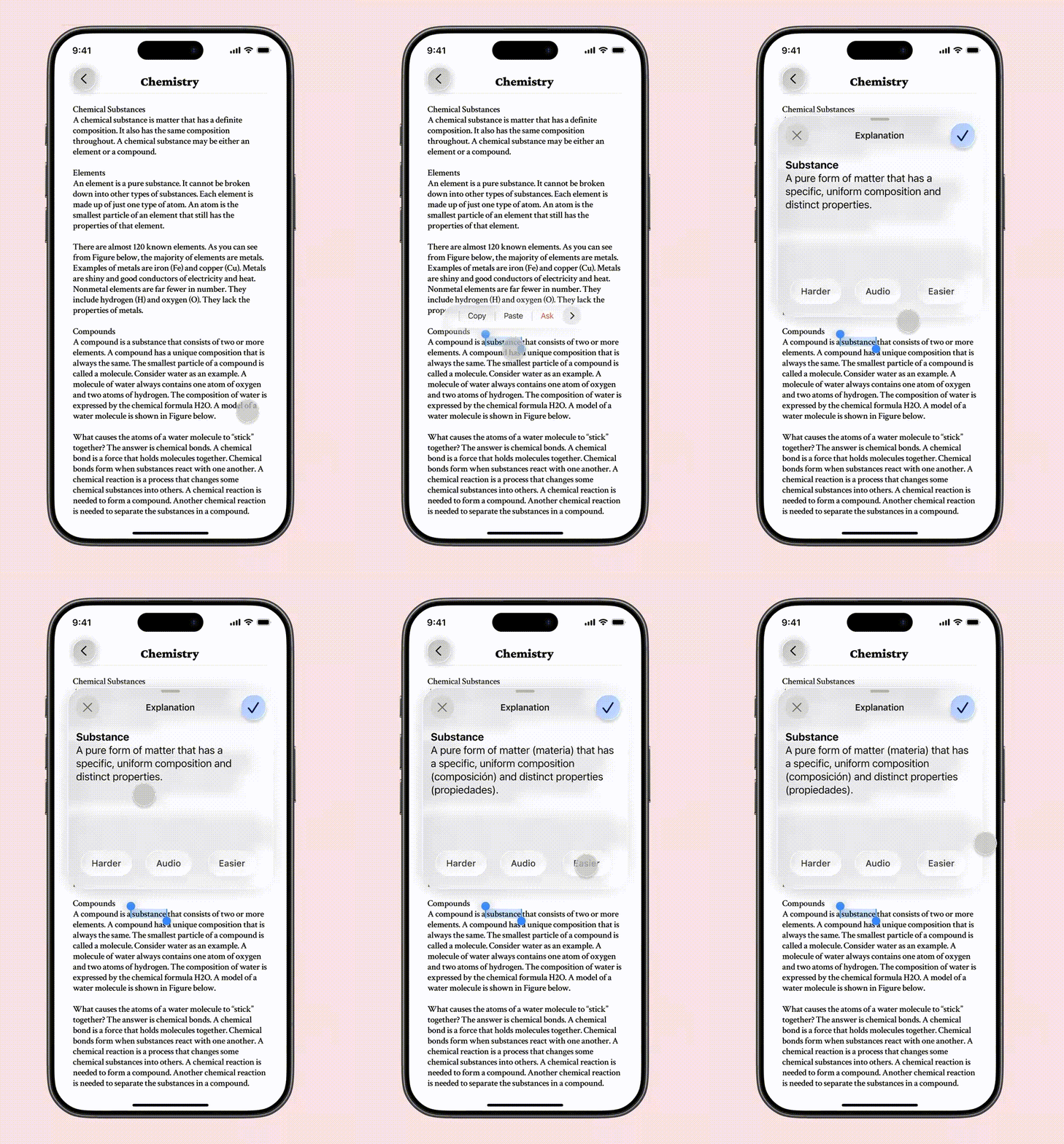
An interactive Figma prototype designed for in-classroom use, where teachers upload lesson materials and students receive real-time, scaffolded support. Each feature was designed around a core belief: ELL students learn English best by engaging with it, not escaping it.

Features
- →Simplified English Explanations. Rather than translating content into a student's native language, the platform re-explains academic concepts in plain English, keeping students encoding and processing in the language they are trying to acquire.
- →Academic Vocabulary Highlighting. Key terms are identified and defined in context, helping students build subject-specific English vocabulary as they encounter it in real lessons rather than in isolation.
- →Self-Selected Scaffolding Levels. Students choose between concise summaries, step-by-step breakdowns, or detailed explanations, preserving academic rigor while giving each learner control over how much support they need.
- →Pronunciation Support. Audio pronunciation tools help students connect written academic English to spoken language, reinforcing comprehension and building confidence in classroom participation.
- →Interactive Quizzes. Bite-sized comprehension checks allow students to verify their understanding of lesson content as they go, rather than discovering gaps after the fact.
- →Teacher Progress Dashboard. Aggregated student data surfaces individual learning needs, giving teachers actionable insight without adding to their workload.