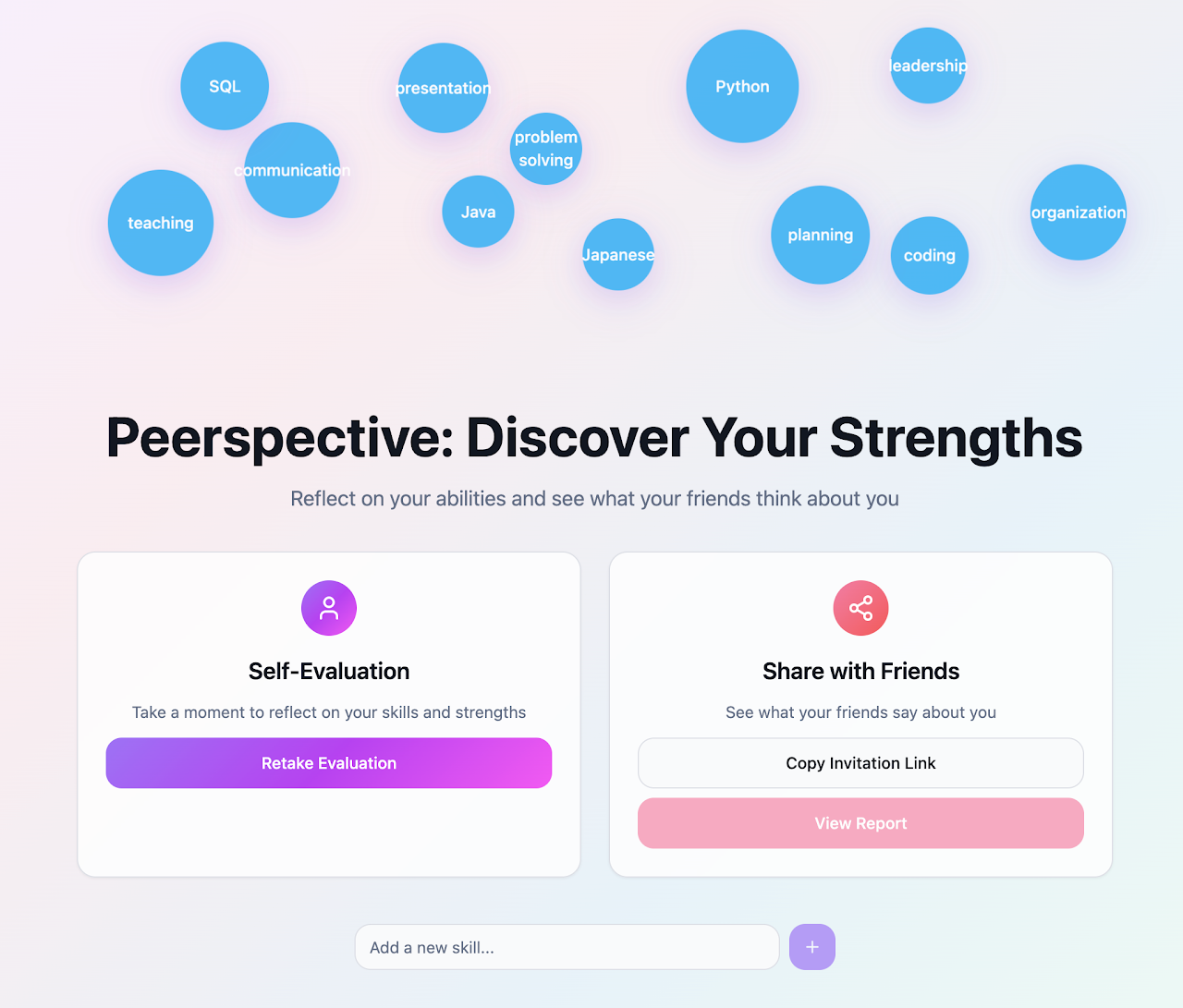
Peerspective
View project ↗A peer-powered platform that bridges the gap between self-perception and external reputation, combining timed skill reflection with peer micro-endorsements to generate data-backed professional profiles.
Overview
Peerspective is a skill reflection tool with two sides: a self-assessment and a peer assessment, both using the same structured format. It was built to help people understand their own strengths through both self-reflection and peer perception, so they can make more confident, grounded choices about who they are and where they're headed.
Origin
Peerspective grew out of a semester-long research project on student motivation in Australian higher education. Through interviews with faculty, teaching assistants, and international students at the University of Sydney and UNSW, a consistent pattern emerged: students who struggled most weren't unmotivated. They were misaligned. Many had chosen their degree based on family pressure or incomplete self-knowledge, with no structured way to understand their own strengths or how others perceived them.
Expert interviews reinforced this. Prof. Alexis Redding (HGSE) identified underdeveloped self-authorship as a core driver of disengagement among college students. The research converged on a theory of action:
If students could self-evaluate their strengths and receive peer perceptions of them, they would trust the results more, feel more confident, and make more grounded choices about their path.
The Problem
Self-perception and how others experience your strengths rarely match. Most people have no structured way to collect genuine impressions from people who know them. When they do reflect on their own strengths, they have no external reference point to validate or challenge what they see.
Existing tools like personality tests and career assessments rely entirely on self-report, which is limited by blind spots and a lack of interpersonal context. There was no lightweight tool for someone to gather real peer perceptions of their strengths and compare them honestly against their own self-view.
What I Built
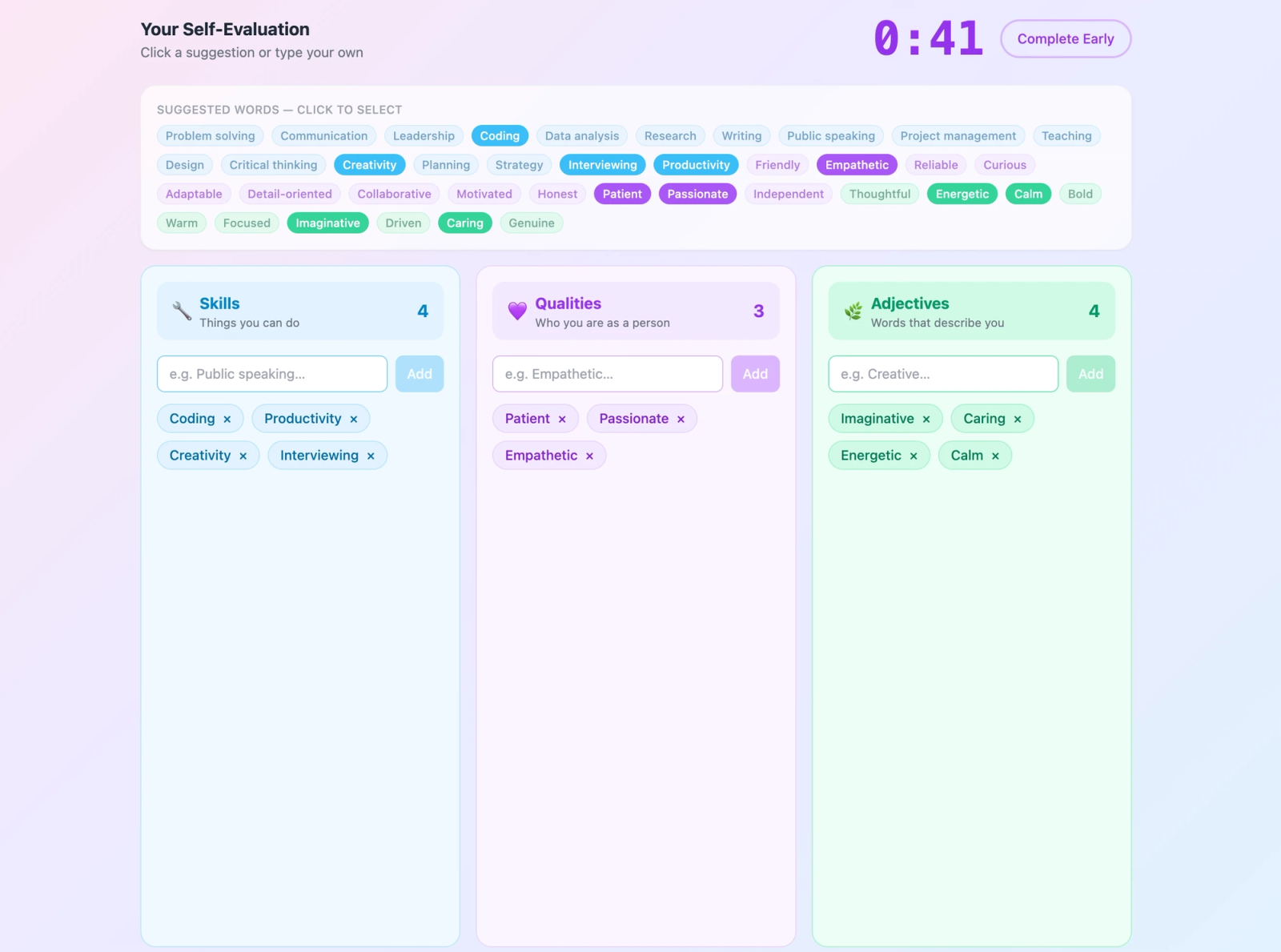
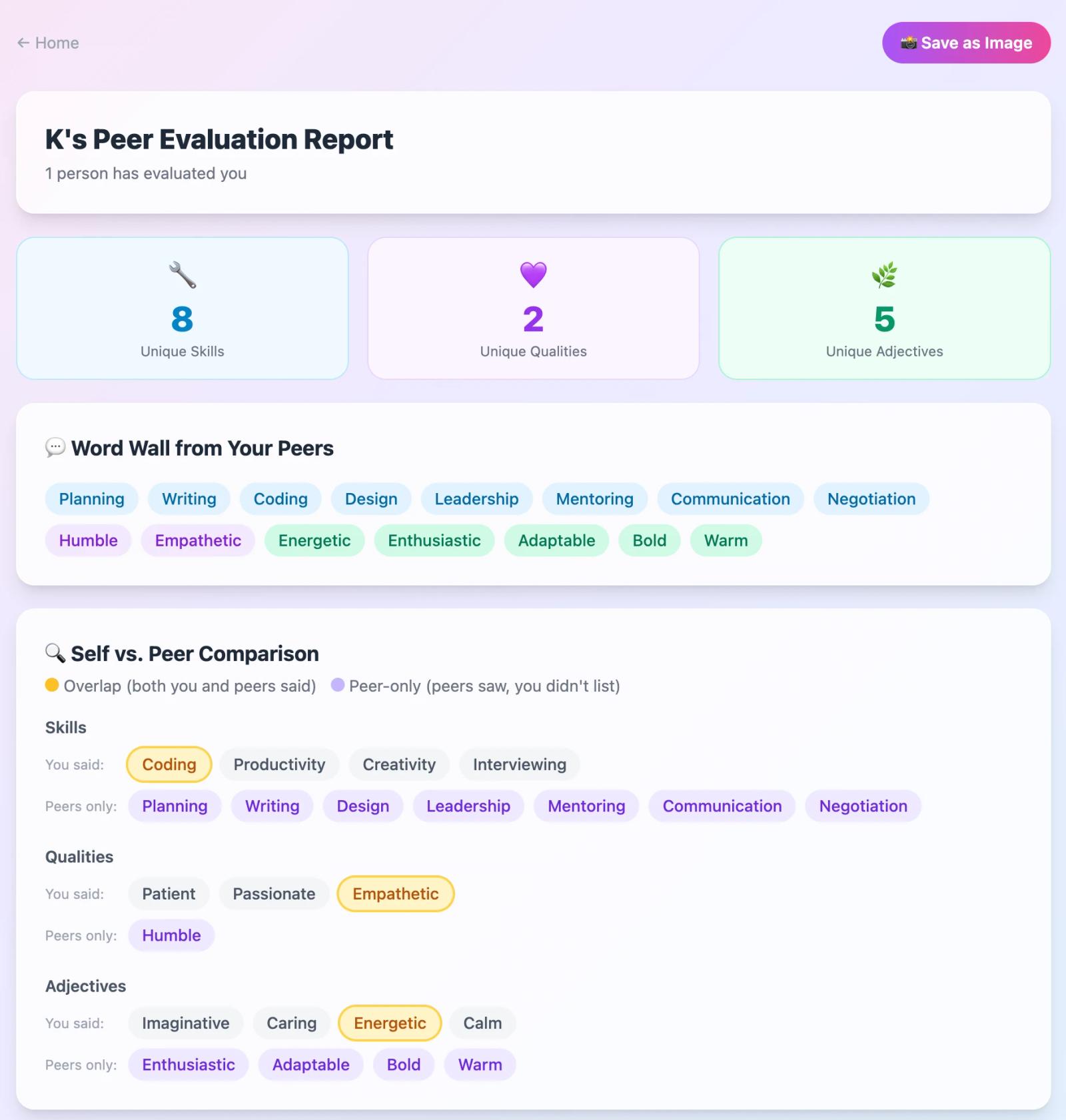
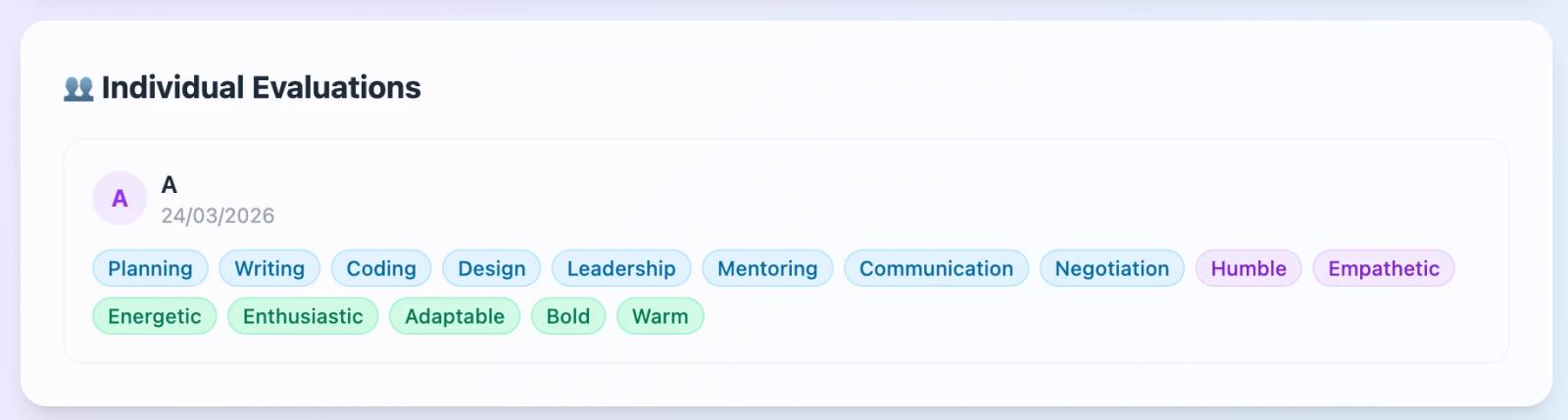
Users select words from a curated set of skill descriptors and character adjectives, or write in their own, to describe themselves. They then send a link to people who know them, who complete the same selection. After responses come in, the user receives a side-by-side report showing how their self-perception compares to the words their peers used most.

The core insight is that the gap between self and peer perception is itself the signal. Seeing that peers consistently describe you as "calm under pressure" when you never think of yourself that way, or that you rate yourself as "strategic" but no one else does, creates a moment of genuine self-discovery.


Key Design Decisions
- →A preset word bank rather than fully open-ended input was a deliberate choice. Free-form responses produce variable, hard-to-compare data. A shared vocabulary makes the self-vs-peer comparison legible and meaningful.
- →The word bank covers both skill-based descriptors (analytical, creative, structured) and interpersonal qualities (dependable, energizing, thoughtful), reflecting the research finding that students' sense of identity draws on both dimensions.
How I Built It
Started from a Lovable MVP, then fully rebuilt in Claude Code for production quality.
- →Frontend: React + Vite
- →Backend: Supabase (PostgreSQL + Row Level Security)
- →Analytics: Amplitude
- →Deployment: Vercel
Currently deployed and instrumented, in early testing ahead of broader release.