Durable Skills (Imagine Learning)
View project ↗Engineering a Custom GPT using Evidence-Centered Design (ECD) for Imagine Learning during a 4-day HGSE practicum. The project translates abstract communication competencies into precise, classroom-ready instructional tasks for Grades 9–12.
Overview
During a high-intensity 4-day practicum at the Harvard Graduate School of Education, we collaborated with Imagine Learning (a leading US K-12 publisher) to solve a critical problem: How can AI responsibly generate high-quality, classroom-ready tasks that develop "Durable Skills"?
Using Evidence-Centered Design (ECD), we successfully prototyped a Custom GPT that translates abstract communication competencies into precise, observable instructional activities for Grades 9-12.
01. The Strategic Pivot: From "Generic AI" to "Precision Pedagogy"
Initially, our scope was a broad K-12 framework. However, early testing revealed that LLMs tend to drift into "generic pedagogy" when the target audience is too wide.
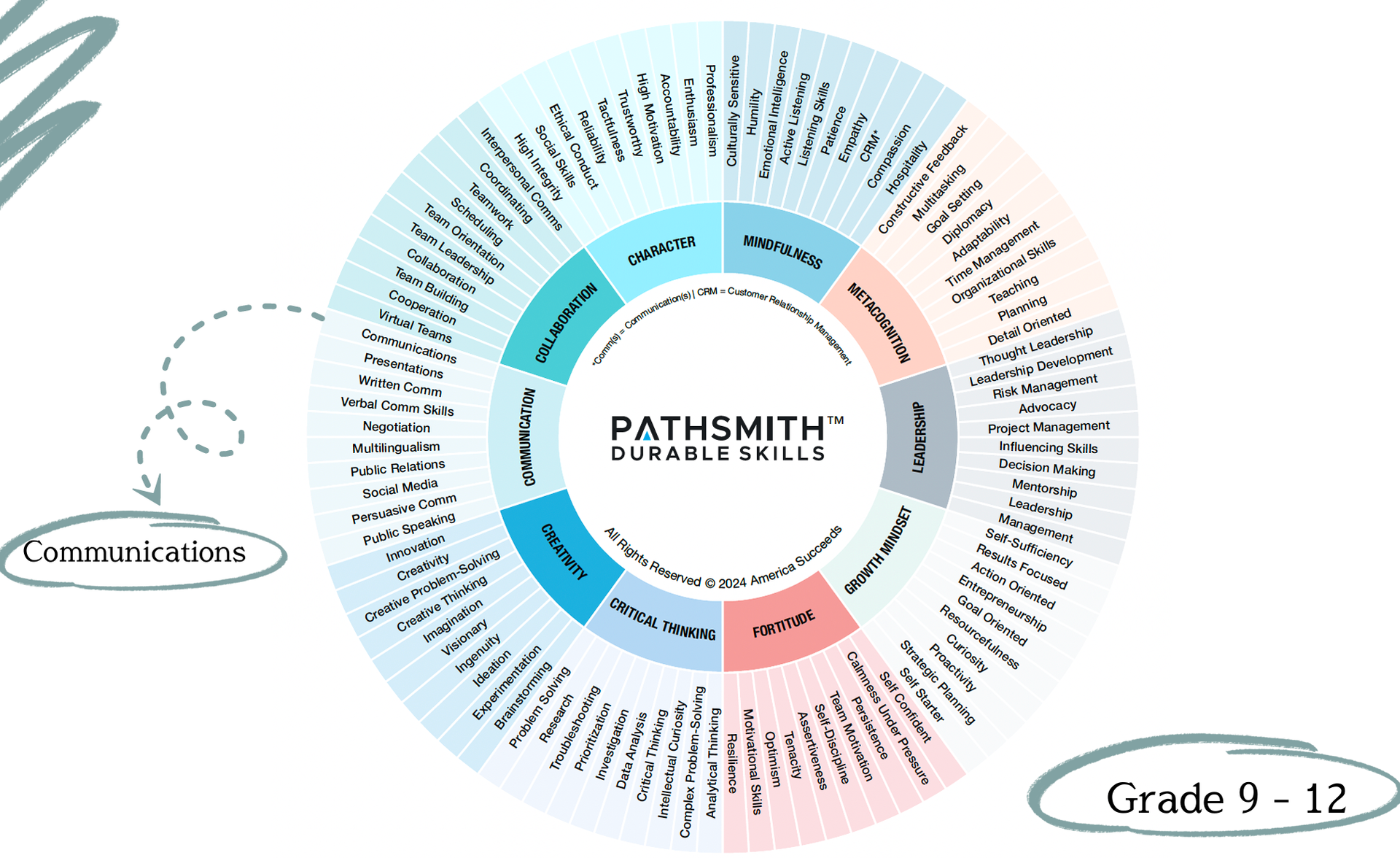
The Decision: We narrowed our scope to Grades 9-12 and focused on a single, high-impact construct: "Communicating to be Understood." This allowed us to build a more robust logic gate for the AI, ensuring the output was sophisticated enough for high school students while maintaining rigorous alignment with the America Succeeds framework.
02. The Methodology: Intellectual Architecture
To ensure the AI output wasn't just "flavor text," we built a four-stage engineering pipeline applying Evidence-Centered Design (ECD):
- Construct Definition: We operationalized Communication not just as "talking," but as the sophisticated exchange of thoughts with acute audience awareness.
- Student & Evidence Models: We defined the specific observable behaviors (e.g., adapting tone for a specific stakeholder) that prove a student is competent.
- Task Models: We designed "constraints." For example, requiring the AI to design tasks for pairs or small groups to ensure the "communication" evidence stayed attributable to individual students.
- Prompt Engineering: We synthesized these models into a multi-layered System Prompt, acting as a "Pedagogical Guardrail" for the LLM.
03. Technical Implementation & Insights
One of my primary contributions was Constraint Engineering. We discovered that without explicit, step-by-step logic, the GPT would "spill outward" creating interactions that were fun but impossible for a teacher to grade.
Key technical insights:
- →Avoiding Pedagogical Drift: AI needs a "prioritization logic" to know which learning objectives matter most in a task.
- →Reducing Teacher Burden: We refined the bot instructions to ensure output included ready-to-use materials (handouts, prompts), reducing the "work" a teacher has to do to implement the AI's idea.
- →Iterative Prompting: We used a "Human-in-the-loop" approach, testing 20+ iterations of the same task to find where the AI logic broke down.
04. Project Artifacts
Below are the presentation slides and a full Technical Brief outlining our research, design pivots, and final outcomes.
05. Results & Impact
"The HGSE students delivered while providing a blueprint for the process. The practicum will feed innovation at IL... providing growth for emerging educational leaders and innovators." — Imagine Learning Leadership
Outcome: Delivered a Proof of Concept (PoC) that demonstrated how LLMs, when constrained by Learning Science, can generate evidence-rich tasks that are far superior to standard "off-the-shelf" AI responses.